Tuesday, January 31, 2012

Protist

Protists belong to the Kingdom Protista, which includes mostly unicellular organisms that do not fit into the other kingdoms.
Characteristics of Protists
  • mostly unicellular, some are multicellular (algae)
  • can be heterotrophic or autotrophic
  • most live in water (though some live in moist soil or even the human body)
  • ALL are eukaryotic (have a nucleus)
  • A protist is any organism that is not a plant, animal or fungus
Protista = the very first
Classification of Protists
  • how they obtain nutrition
  • how they move
Animallike Protists - also called protozoa (means "first animal") - heterotrophs
Plantlike Protists - also called algae - autotrophs
Funguslike Protists - heterotrophs, decomposers, external digestion

.Animallike Protists: Protozoans
Four Phyla of Animallike Protists
Classified by how they move
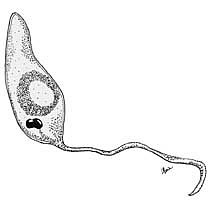
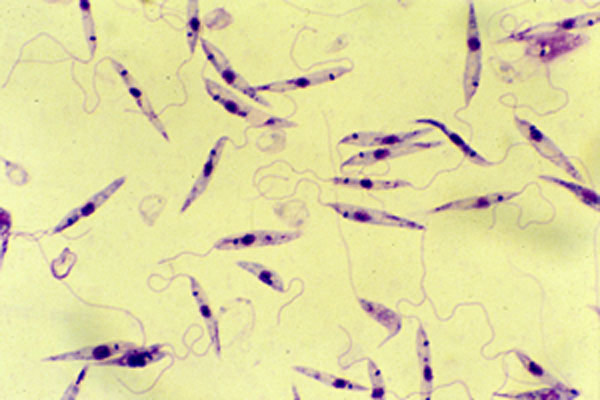
  • Zooflagellates - flagella
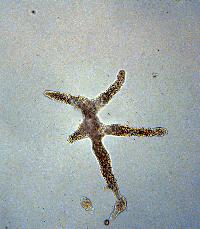
  • Sarcodines - extensions of cytoplasm (pseudopodia)
  • Ciliates - cilia
  • Sporozoans - do not move
Zooflagellates
move using one or two flagella
absorb food across membrane

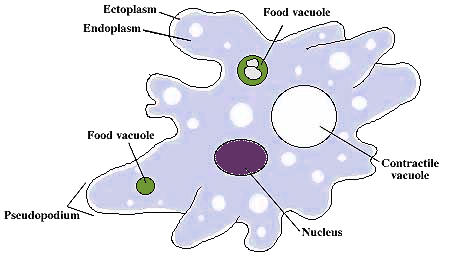
Ameba (See Ameba Coloring Sheet)
moves using pseudopodia ( "false feet" ), which are like extensions of the cytoplasm --ameboid movement
ingests food by surrounding and engulfing food (endocytosis)
, creating a food vacuole
reproducing by binary fission (mitosis)
contractile vacuole - removes excess water
can cause amebic dysentery in humans - diarrhea and stomach upset from drinking contaminated water
Other sarcodines: Foraminferans, Heliozoans
Sunday, January 15, 2012

Biotecnology

What is biotechnology?
-biotechnology is using living things to create products or to do tasks for human beings.
- Biotechnology is the practice of using plants, animals and micro-organisms such as bacteria, as well as biological processes - such as the ripening of fruit or the bacteria that break down compost - to some benefit.

Important of biotechnology 

biotechnology is used in in industry, medicine and agriculture to produce foods, medicines, test for diseases and remove waste.
It can also be used to solve problems and conduct research. Over time, biotechnology has formed the basis of learning about people and diseases. Biotechnology has also underpinned the development of treatments.


DNA Replication image from the Human Genome Project (HGP)

Disadvantages of biotechnology

(1) Loss of privacy. Medical and genetic information is more likely to be stored and shared.

(2) Discrimination. Private insurers, employers, and governmental entities are more likely to discriminate against people who have genetic or medical anomalies, especially if such information is available in databases.

(3) Cloning. Reproductive cloning could create "Frankensteins" or result in eugenic practices. Therapeutic cloning is also regarded as unethical by some groups, primarily religious organizations.

(4) Transformations of wild species. Exposure of wild species to genetically modified crops or domestic livestock could cause "super species" to evolve with resistance to pesticides, herbicides, or fungicides.

(5) Loss of biodiversity. Development of genetically modified crops or domestic livestock could reduce genetic variety among both domesticated and wild species.

(6) Harmful chemicals. Although biotechnology will generate many new and valuable chemicals, some chemicals with unknown or damaging environmental impacts are likely to be developed.


Fungi

The Kingdom Fungi includes some of the most important organisms, both in terms of their ecological and economic roles. By breaking down dead organic material, they continue the cycle of nutrients through ecosystems. In addition, most vascular plants could not grow without the symbiotic fungi, or mycorrhizae, that inhabit their roots and supply essential nutrients. Other fungi provide numerous drugs (such as penicillin and other antibiotics), foods like mushrooms, truffles and morels, and the bubbles in bread, champagne, and beer.
Fungi also cause a number of plant and animal diseases: in humans, ringworm, athlete's foot, and several more serious diseases are caused by fungi. Because fungi are more chemically and genetically similar to animals than other organisms, this makes fungal diseases very difficult to treat. Plant diseases caused by fungi include rusts, smuts, and leaf, root, and stem rots, and may cause severe damage to crops. However, a number of fungi, in particular the yeasts, are important "model organisms" for studying problems in genetics and molecular biology.


 How fungi reproduce?


Fungi reproduce by producing spores. These are tiny cells inside a protective coating, which grow into new Fungi. Some fungi can survive times when the weather turns hot and dry, by producing protective coatings for their spores.

 
Where do Fungi Live?
Fungi love damp areas. They can be found nearly everywhere, and you can find them springing up in woods, parks, gardens and mountain-tops.
Some fungi live tangled up amongst the roots of trees. You might also find them in places where you do not want to find them, like in your fruit bowl, turning oranges green and dusty, or in damp bathrooms growing on walls in black mouldy patches.

Fungi can causing desease!!

causing diseases, such as Dutch Elm Disease, or athletes foot in humans.


Important of Fungi


Fungi are important because they help to process dead plant and animal matter through decay. For example, fungi help turn a cow pat into soil.

Fungi are also the life-line for many plants. Lots of string-like fungi live tangled up with a plant's roots, and help to pass on nutrients. This benefits the plant as well as the fungus. This is known as a mycorrhizal association. It is a symbiotic relationship.
The fungus that produces penicillin is very important and has saved many lives, because it kills harmful bacteria.

Fungi are also used to make bread, blue cheeses and beer